
Arturo Rivera
Arturo Rivera (b. 1945, Mexico City) is a powerful voice in contemporary Mexican painting, known for his striking and often unsettling figurative works. He studied at the Academia de San Carlos and later expanded his practice in Europe, studying silkscreen in Germany during the 1970s.
Rivera lived in New York City for eight years, where he developed a distinctive visual language that blends realism with psychological intensity and surreal elements. His work often confronts themes of the body, identity, and the darker aspects of the human condition, rendered with meticulous detail and dramatic force.
He has exhibited internationally, including in New York, Germany, and London, and has shown at major institutions such as the Museo de Arte Moderno in Mexico City. His work continues to stand out for its bold imagery and uncompromising exploration of contemporary life.
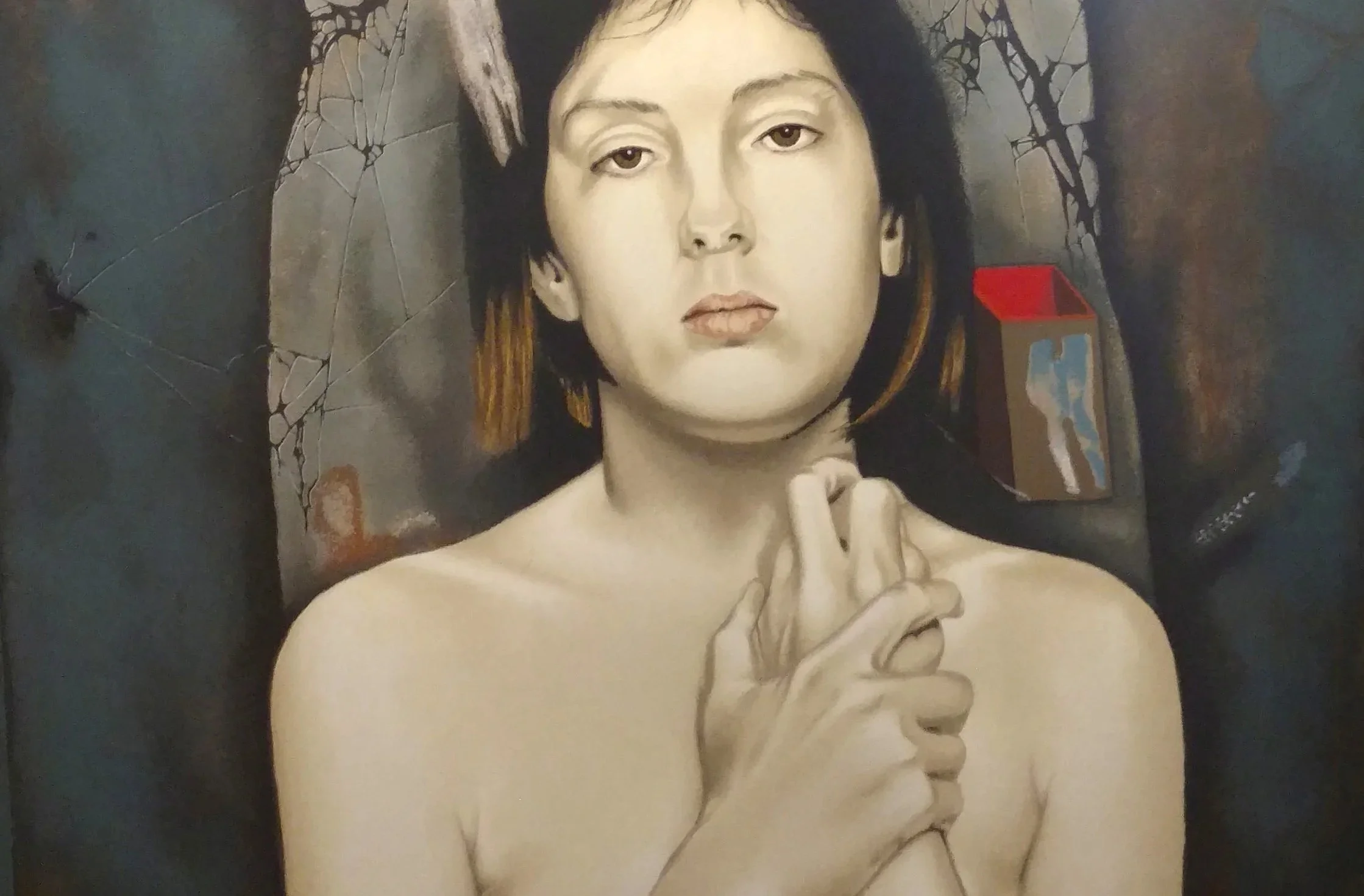

Araf Omne Vivium
Silkscreen, printed by hand
Limited edition of 100, signed (5/100)
36.61 × 22.44 in.
Araf Omne Vivium unfolds as a visceral meditation on the fragility and persistence of life. In this work, Rivera confronts the viewer with a tension that is both unsettling and deeply human: the body as a site of vulnerability, transformation, and endurance. Figures emerge and dissolve within ambiguous space, suspended between presence and absence, as if caught in a moment of becoming.
Rivera’s unmistakable visual language—precise, almost surgical, yet emotionally charged—invites us to look closely, even when the subject resists comfort. The title itself, suggestive of a universal condition of living beings, frames the piece as both intimate and expansive. It is not simply a depiction of the human form, but an exploration of existence—where beauty and distortion, strength and decay, coexist.
There is a quiet intensity in the stillness of the composition. Time feels arrested, yet the undercurrent of change is constant. As in much of Rivera’s work, the psychological dimension is paramount: the figures seem to carry an internal weight, revealing the invisible tensions of identity, memory, and corporeality.
Araf Omne Vivium ultimately asks the viewer to confront the complexity of being alive—to witness, without turning away, the raw and unfiltered truths embedded in the human condition.
Quisque iaculis facilisis lacinia. Mauris euismod pellentesque tellus sit amet mollis.